Introduction to Network Protocols
Network protocols are the core of computer networks. They define how devices communicate with each other, ensuring that data can be transmitted correctly, efficiently, and securely. Whether browsing the web, sending emails, or making video calls, none of these can be done without the support of network protocols.
Understanding network protocols is the foundation of learning computer networks and the essential path to mastering network technology.
Core Functions of Network Protocols
- Standardized Communication:Network protocols provide unified standards for communication between devices, ensuring that devices from different manufacturers and different operating systems can interconnect and interoperate.
- Reliable Data Transmission:Through mechanisms such as error detection and data retransmission, network protocols ensure that data is not lost or corrupted during transmission.
- Efficient Routing and Addressing:Network protocols define how to send data from a source device to a destination device, including address assignment, route selection, and more.
- Security:Modern network protocols typically include encryption and authentication mechanisms to protect data from eavesdropping or tampering.
Key Components of Network Protocols
- Syntax:Defines the format and structure of data. For example, how the header and trailer of a data packet are organized.
- Semantics:Defines the meaning of data. For example, one field represents the source address, and another field represents the destination address.
- Timing:Defines the order in which data is sent and received. For example, the three-way handshake process of the TCP protocol.
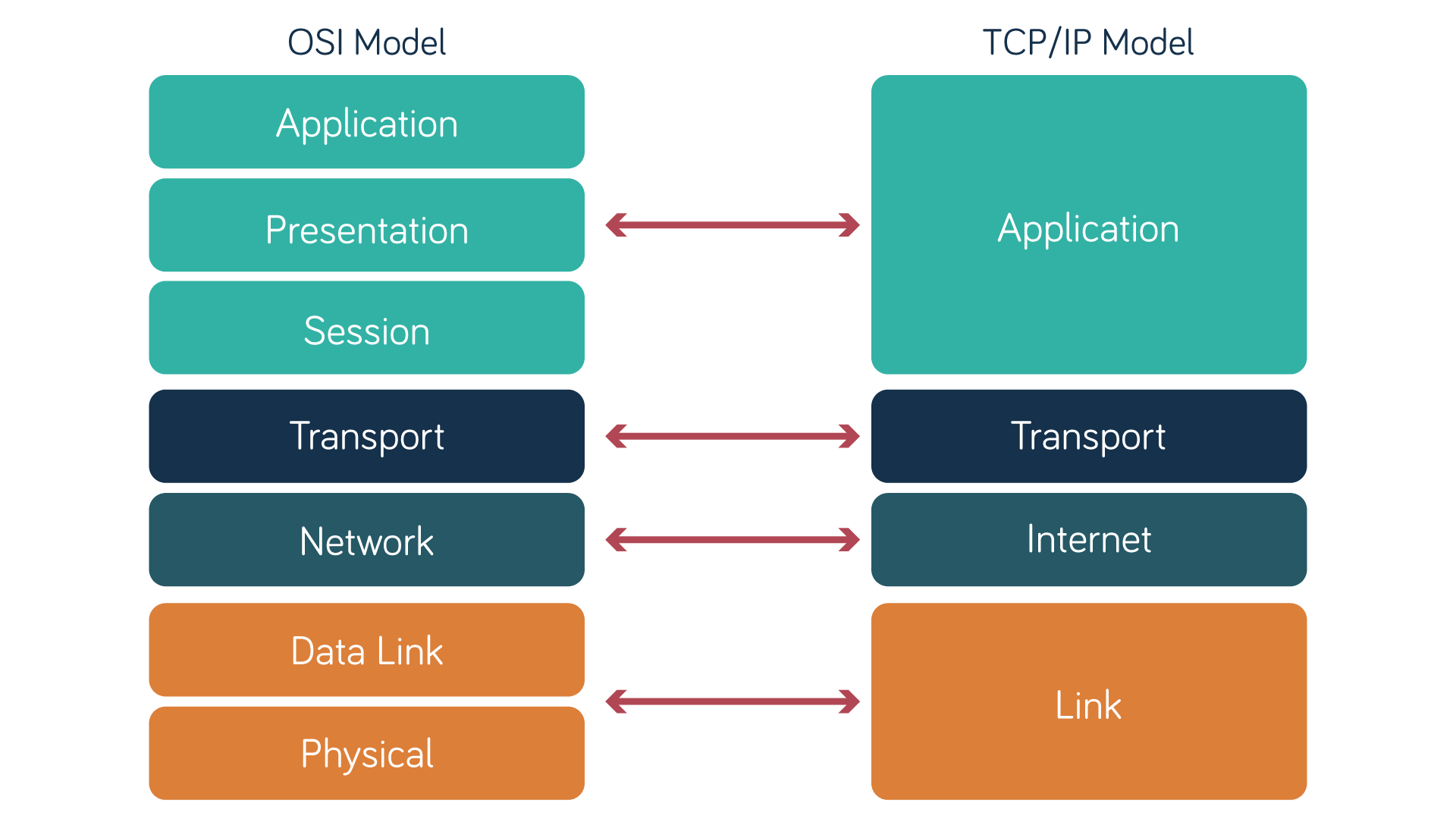
- Layered Structure of Network Protocols:Network protocols are usually organized according to layered models. The most common models are the OSI seven-layer model and the TCP/IP four-layer model. Each layer has specific functions and protocols.
OSI Seven-Layer Model
- Physical Layer:Responsible for transmitting raw bit streams (e.g., cables, optical fibers, radio waves).
- Data Link Layer:Responsible for encapsulating data into frames and transmitting them within the same network (e.g., Ethernet protocol).
- Network Layer:Responsible for routing and addressing of data packets (e.g., IP protocol).
- Transport Layer:Responsible for end-to-end reliable transmission (e.g., TCP, UDP protocols).
- Session Layer:Responsible for establishing, managing, and terminating sessions (e.g., RPC protocol).
- Presentation Layer:Responsible for data formatting and encryption (e.g., SSL/TLS protocol).
- Application Layer:Responsible for providing user interfaces and application services (e.g., HTTP, FTP protocols).
TCP/IP Four-Layer Model
- Network Interface Layer:Corresponds to the physical layer and data link layer of the OSI model.
- Internet Layer:Corresponds to the network layer of the OSI model (e.g., IP protocol).
- Transport Layer:Corresponds to the transport layer of the OSI model (e.g., TCP, UDP protocols).
- Application Layer:Corresponds to the application, presentation, and session layers of the OSI model (e.g., HTTP, DNS protocols).
Examples of Common Network Protocols
- HTTP/HTTPS:Used for web browsing; HTTPS is the secure version of HTTP.
- TCP/UDP:TCP provides reliable transmission, while UDP provides fast transmission.
- IP:Responsible for sending data packets from the source address to the destination address.
- DNS:Converts domain names into IP addresses.
- FTP:Used for file transfer.
- SMTP/POP3/IMAP:Used for sending and receiving email.
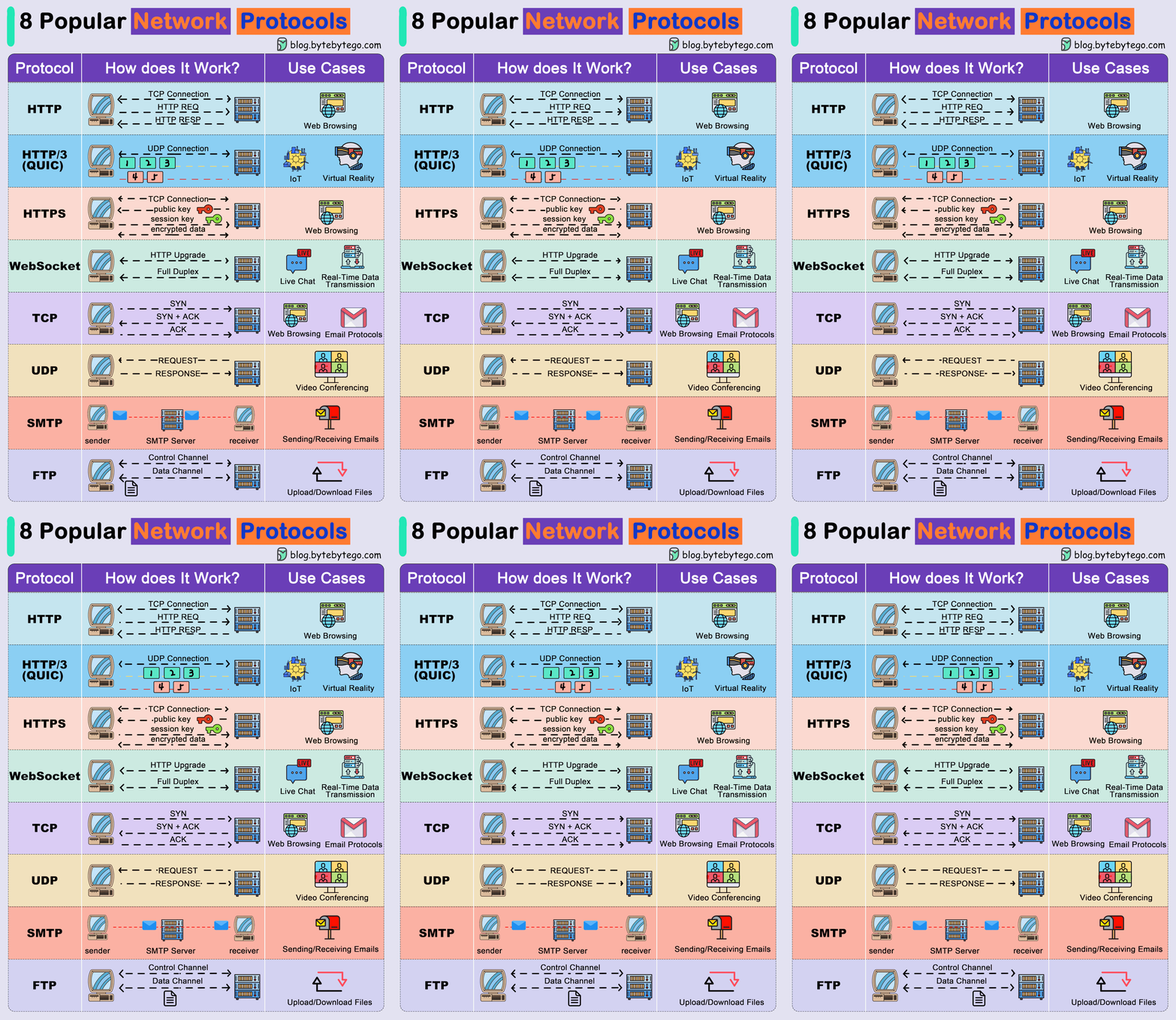
Protocol descriptions in the figure above:
| Protocol Name | Definition | Main Functions | Typical Application Scenarios |
|---|---|---|---|
| HTTP (HyperText Transfer Protocol) | Client-server protocol used to retrieve resources (e.g., HTML documents). | The basic web data exchange protocol, supporting client requests and server responses. | Web browsing, web application interaction, etc. |
| HTTP/3 | The next major version of HTTP. | Based on QUIC (a transport protocol designed for mobile internet), uses UDP instead of TCP, supporting faster web response speeds. | Applications requiring high bandwidth and low latency, such as virtual reality (VR) and mobile applications. |
| HTTPS (HyperText Transfer Protocol Secure) | The encrypted extension of HTTP. | Uses encryption technology (e.g., TLS) to protect communication security and prevent data leakage and tampering. | Secure web browsing, e-commerce, online payments, etc. |
| WebSocket | A full-duplex communication protocol based on TCP. | Enables real-time data push between client and server, supporting bidirectional communication. | Online gaming, stock trading, instant messaging applications, etc. |
| TCP (Transmission Control Protocol) | A connection-oriented transport layer protocol. | Ensures reliable transmission of data packets, supporting ordered delivery and error detection. | Applications requiring high reliability, such as file transfer, web browsing, etc. |
| UDP (User Datagram Protocol) | A connectionless transport layer protocol. | Provides fast data transmission without guaranteeing the order and reliability of data packets. | Real-time communication applications, such as voice calls, video streaming, games, etc. |
| SMTP (Simple Mail Transfer Protocol) | The standard protocol for email transmission. | Responsible for transmitting email from the sender to the recipient's mail server. | Email sending and relay. |
| FTP (File Transfer Protocol) | Used to transfer files between client and server. | Provides file upload and download functions, supporting separation of control and data channels. | File sharing, remote file management, etc. |
Importance of Network Protocols
- Interconnectivity:Network protocols are the foundation of the internet. Without protocols, devices cannot communicate with each other.
- Efficient Communication:Through layered design and optimization, network protocols ensure efficient data transmission.
- Security:Modern network protocols integrate encryption and authentication mechanisms to protect user privacy and data security.