GGP Protocol
GGP (Gateway-to-Gateway Protocol) is an early routing protocol used to exchange routing information between core routers of the Internet.
GGP is one of the earliest routing protocols used in ARPANET (the predecessor of the modern Internet), mainly used to dynamically learn and propagate routing information between gateways (i.e., routers).
How GGP Works
GGP is a distance-vector routing protocol that updates routing tables by periodically exchanging routing information. The following is its workflow:
1. Routing Information Exchange
GGP gateways periodically exchange routing information, including the distance (hop count) to each network.
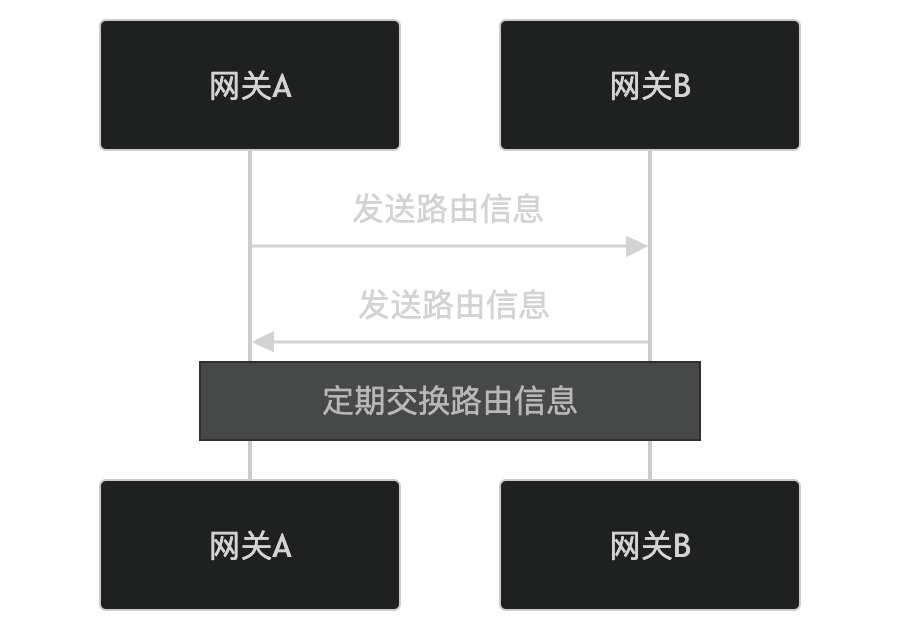
- Gateway A and Gateway B periodically exchange their routing table information.
- The routing information includes the hop count (distance) to each network.
2. Routing Table Update
The gateway updates its own routing table based on the received routing information and selects the optimal path.
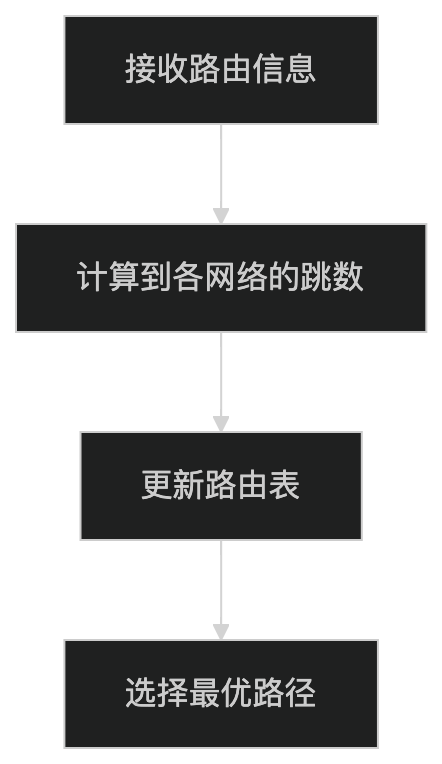
- The gateway calculates the shortest path to each network based on the received routing information.
- Update the routing table and select the path with the fewest hops.
3. Routing Convergence
Through continuous routing information exchange, the gateways in the network gradually reach a state of routing convergence, that is, the routing tables of all gateways are consistent.
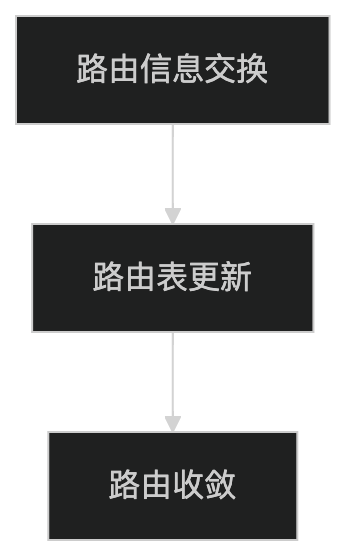
- After routing convergence, the gateways in the network agree on the optimal paths to each network.
Key Features of GGP
- Distance-Vector Algorithm:
- Uses the distance-vector algorithm to calculate the shortest path to each network.
- Periodic Updates:
- Gateways periodically exchange routing information to ensure timely updates of routing tables.
- Simplicity:
- The protocol design is simple and easy to implement.
- Early Applications:
- Mainly used in core routers in ARPANET.
Historical Background of GGP
GGP is one of the earliest routing protocols used in ARPANET, developed by BBN (Bolt, Beranek and Newman) in the 1970s. It is the predecessor of modern Internet routing protocols and laid the foundation for later routing protocols such as RIP and OSPF. With the development of the Internet, GGP was gradually replaced by more advanced routing protocols.
Advantages and Disadvantages of GGP
Advantages:
- Simplicity:
- The protocol design is simple and easy to implement.
- Early Applications:
- It played an important role in ARPANET and laid the foundation for the development of the Internet.
Disadvantages:
- Poor Scalability:
- Not suitable for large-scale networks; routing convergence is slow.
- Limited Functionality:
- Only supports the distance-vector algorithm and cannot handle complex network topologies.
Alternatives to GGP
With the development of the Internet, GGP was gradually replaced by more advanced routing protocols, including:
- RIP(Routing Information Protocol):
- A distance-vector routing protocol suitable for small networks.
- OSPF(Open Shortest Path First):
- A link-state routing protocol suitable for large networks.
- BGP(Border Gateway Protocol):
- A path-vector routing protocol used for Internet core routing.
In summary, GGP is an early routing protocol used to exchange routing information between core routers in ARPANET. It uses the distance-vector algorithm to calculate the shortest paths and achieves routing convergence by periodically updating routing tables. Although GGP played an important role in the early development of the Internet, it was gradually replaced by more advanced routing protocols as network scale expanded and complexity increased.
Other Extensions