SQL COUNT()Function
The COUNT() function returns the number of rows that match the specified criteria.
SQL COUNT(column_name) Syntax
The COUNT(column_name) function returns the number of values in the specified column (NULL values are not counted):
SQL COUNT(*) Syntax
The COUNT(*) function returns the number of records in a table:
SQL COUNT(DISTINCT column_name) Syntax
The COUNT(DISTINCT column_name) function returns the number of distinct values in the specified column:
Note:COUNT(DISTINCT) works with ORACLE and Microsoft SQL Server, but cannot be used in Microsoft Access.
Demo Database
In this tutorial, we will use the EXAMPLE sample database.
Below is a selection from the "access_log" table:
+-----+---------+-------+------------+
| aid | site_id | count | date       |
+-----+---------+-------+------------+
|   1 |       1 |    45 | 2016-05-10 |
|   2 |       3 |   100 | 2016-05-13 |
|   3 |       1 |   230 | 2016-05-14 |
|   4 |       2 |    10 | 2016-05-14 |
|   5 |       5 |   205 | 2016-05-14 |
|   6 |       4 |    13 | 2016-05-15 |
|   7 |       3 |   220 | 2016-05-15 |
|   8 |       5 |   545 | 2016-05-16 |
|   9 |       3 |   201 | 2016-05-17 |
+-----+---------+-------+------------+
SQL COUNT(column_name) Example
The following SQL statement calculates the total visits for "site_id"=3 in the "access_log" table:
Example
WHERE site_id=3;
SQL COUNT(*) Example
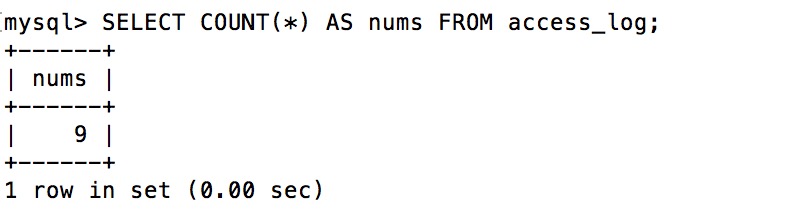
The following SQL statement calculates the total number of records in the "access_log" table:
Example
Executing the above SQL outputs the following result:
SQL COUNT(DISTINCT column_name) Example
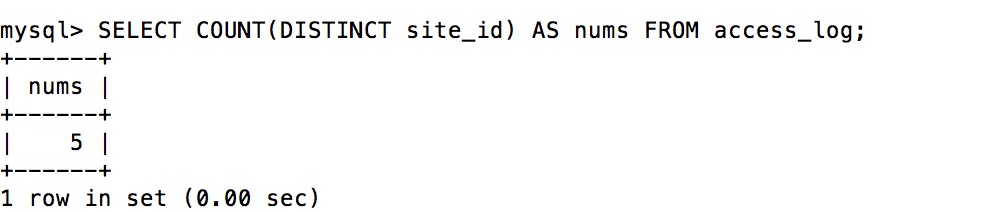
The following SQL statement calculates the number of records with distinct site_id in the "access_log" table:
Example
Executing the above SQL outputs the following result:
Other Extensions