Loyal "Apple fans" cultivated by Steve Jobs are eagerly awaiting Apple's fall new product launch event on September 9, but this does not prevent the troops and generals of the Android camp from besieging Apple during the golden month of September.
During the IFA consumer electronics show in Berlin, Germany, in early September, mainstream Android camp manufacturers such as Samsung, Sony, Huawei, TCL, and HTC successively unveiled their next-generation flagship smartphones. A few days earlier, OPPO, Meizu, and other manufacturers also launched their new phones in China amid much fanfare.
The simultaneous unveiling of flagship smartphones from the Android camp seems to say to "dual-wielding" users and the growing number of Android consumers: Come on, you need to get a new large-screen phone!
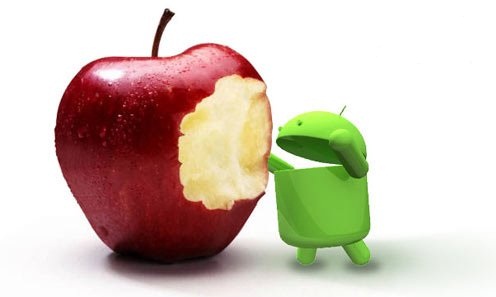
Android besieges Apple
Although its charm remains, Apple's superiority in the global smartphone market is fading. According to IDC's latest smartphone market data for Q2 2014, iPhone shipments grew 12.7% year-over-year (35.2 million units in the quarter), but compared with the 33.3% growth of the Android camp (255.3 million units in the quarter), the former's growth rate is not particularly fast.
More pressing, in Q2 of this year, iPhone's share of the overall smartphone market dropped to 11.7% from 13% in the same period last year, while Android phones' market share grew to 84.7% from 79.6% in Q2 last year.
In a few days, Apple will once again become the focus of worldwide attention—it will hold a grand launch event in California, where two new iPhone models are expected to be unveiled. Reports say the new iPhone will finally feature the long-awaited large screen, and large screens are exactly what have made many Android smartphones, including Samsung's, sell well.
To strike first, Android camp phone makers must push their flagship products to market before Apple releases the new iPhone. However, the release and availability dates of the two camps' new products are not far apart; who wins more consumers ultimately depends on the products themselves.
The strong general Samsung has grown old
As the Android hardware maker that is the only one able to counterbalance Apple in brand, sales scale, and profits, Samsung's new products launched in golden September are extremely eye-catching.
On the eve of IFA, Samsung released the flagship smartphone Galaxy Note 4, along with three distinctive new products: the Galaxy Note Edge smartphone with a curved side screen, the Gear S smartwatch, and the Gear VR virtual reality headset.
Releasing two new phones at the same time is extremely rare in Samsung's product strategy in recent years. Some analysts believe this is a strike by the Samsung Note family at a time when large-screen phones are flooding the market, especially with a new large-screen iPhone about to be released.
At present, Samsung, still the market leader, has entered crisis mode. "The signs that Nokia began to decline in the past have now subtly appeared in Samsung," said an anonymous mobile phone industry practitioner. He believes that under the combined effects of multiple factors, including weak product innovation and channel turmoil, Samsung's profit margins and market share have begun to shrink, and it must prove to the outside world that it has not yet aged.
Therefore, at a time when the global smartphone market has few major innovations that can amaze consumers, Samsung still wants to convey a message to the outside world: in innovation, design, and pleasing users, Samsung has always been in the lead.
Judging from the two newly released phones, the biggest highlight of the Galaxy Note 4 is its 5.7-inch 2K screen, plus fast charging and ultra power-saving features learned from Chinese phone makers. The Note Edge, which focuses on the "curved screen" concept, is highly controversial. How practical it really is, and whether it can become a trump card to boost Samsung's phone business, remains to be tested by the market.
Chinese brands launch a powerful assault
In addition to Samsung, which sits at the top of the Android camp, Sony's annual flagship smartphone Xperia Z3 is also quite eye-catching. It is understood that the Xperia Z3 continues the design of the Z-series smartphones and Sony's iconic audio/video and camera advantages, while adding the ability to remotely control PS4 games.
At this year's IFA, the phone new products from the Chinese camp drew even more attention than Samsung and Sony.
On the afternoon of September 4 local time in Germany, Huawei released two new flagship smartphones, the Ascend Mate 7 and Ascend G7. Among them, the Ascend Mate 7, equipped with Huawei's HiSilicon Kirin 925 octa-core processor, is a 6-inch large-screen phone with an all-metal body, and fingerprint recognition technology is also a major highlight of this phone.
For Huawei, which is transforming from B2B to B2C and building a consumer brand, the new phones it has released in Europe in the past two years are particularly important. According to Richard Yu, CEO of Huawei's Consumer Business Group, Huawei phones must not only achieve scale, but also build a bigger brand to improve profitability.
Later that same evening, TCL Communication, which has always performed strongly in the European market, released the new large-screen smartphone Hero2 and the new tablet Hero8. TCL Communication CEO Guo Aiping said the company's smartphone sales in 2014 are expected to reach 29.9 million units, with smartphones accounting for 50.2% of its total handset sales. In 2013, TCL Communication's global handset shipments were 55.2014 million units, with smartphones only making up one-third.
In addition, HTC also released its first smartphone featuring a Qualcomm 64-bit processor, the HTC Desire 820, at IFA. The phone's biggest selling point is its processor: four 1.5GHz cores handle heavy multitasking, while the other four 1.0GHz cores handle daily computing. HTC says this design is intended to further improve performance and battery life.
Overall, although Android manufacturers represented by Samsung have not produced highly innovative products, their new products, whether in terms of appearance, configuration, or performance, have left little room for Apple to break through. Who will be the winner of golden September?
Source: NetEase Tech