As a programmer, if you only focus on writing code, that won't do. You need to set aside some time to enrich your knowledge and read more books. Here I will recommend some good books for programmers, hoping they can be of help to programmers.
The Big Data Era
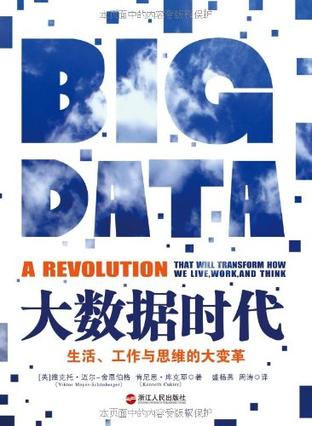
"The Big Data Era" is a pioneering work in foreign big data research. The author, Viktor Mayer-Schönberger, is hailed as "the first person in big data commercial application". He has taught at multiple internet research hubs including Harvard University, Oxford University, Yale University, and the National University of Singapore. As early as 2010, he published a 14-page forward-looking study on big data applications in The Economist.
In the book, Viktor Mayer-Schönberger insightfully points out that the information storm brought by big data is transforming our lives, work, and thinking. Big data has initiated a major era transformation, and the book uses three parts to describe the mindset changes, business changes, and management changes of the big data era.
Viktor's most insightful point is that he clearly states the biggest change in the big data era is abandoning the desire for causality and instead focusing on correlations. That is, we only need to know "what" without needing to know "why". This overturns thousands of years of human thinking habits and poses a brand-new challenge to human cognition and the way we interact with the world.
Ten Years of Taobao Technology

"Ten Years of Taobao Technology" summary: The development of any website is not achieved overnight. It encounters various problems and business pressures during its growth. It is these problems and pressures that drive technological progress and development, and in turn, technology development promotes further business growth. Today, Taobao's traffic ranks among the top 15 globally and top 3 domestically, and its system servers have grown from one to over ten thousand.
"Ten Years of Taobao Technology" tells, from an engineer's perspective, the growth of Taobao as a super-large-scale internet system and the causes and effects of all its proactive and reactive technological changes. The book contains behind-the-scenes stories, product experience, architecture evolution, technology enlightenment, as well as expert growth, industry gossip, failure cases, and inspirational stories. The writing is fluent with the unique humor of technical people; the content is positive and vivid, all based on the author's personal experiences.
White Hat Discusses Web Security
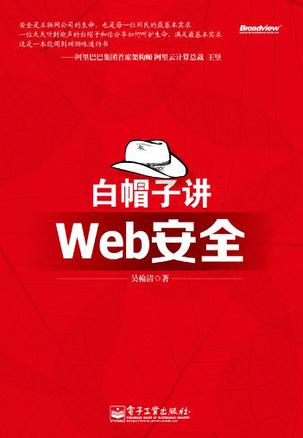
"White Hat Discusses Web Security" summary: In the internet age, data security and personal privacy face unprecedented challenges, and novel attack techniques emerge endlessly. How can we better protect our data? "White Hat Discusses Web Security" will take you into the world of Web security and let you understand all aspects of Web security. Hackers are no longer mysterious; attack techniques are something you too can learn, and small website owners can find the right security path themselves. How do big companies handle security, and why do they choose such solutions? You can find the answers in "White Hat Discusses Web Security". Detailed analysis lets you not only know "what" but also "why".
Refactoring: Improving the Design of Existing Code

"Refactoring: Improving the Design of Existing Code" clearly reveals the refactoring process, explains the principles and best practices of refactoring, and provides when and where to start digging into code to improve it. The book offers more than 70 viable refactorings, each introducing the motivation and technique of a proven code transformation method. The refactoring principles proposed in the book help you modify your code one small step at a time, thereby reducing risks during development.
"Refactoring: Improving the Design of Existing Code" is suitable for software developers, project managers, and others. It can also serve as a reference for teachers and students in computer science and related majors in higher education institutions.
Clean Code
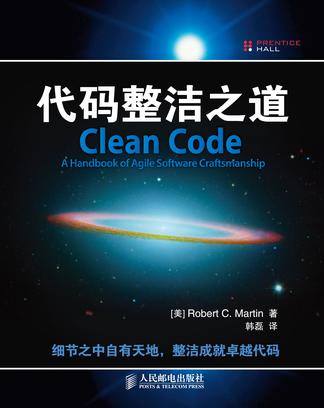
Software quality depends not only on architecture and project management, but is also closely related to code quality. This is something both agile development and traditional development schools have to admit. "Clean Code" presents an idea: code quality is directly proportional to its cleanliness. Clean code is both reliable in quality and lays a solid foundation for later maintenance and upgrades.
As a leader in the programming field, the author of "Clean Code" offers a series of effective practices for writing clean code. These practices are presented in the book as rules (or "lessons"), accompanied by positive and negative examples from real projects. As long as you follow these rules, you can write clean code and effectively improve code quality.
"Clean Code" is intended for all programmers and technical managers who wish to improve code quality. The rules in the book come from the author's years of practical experience, covering multiple programming aspects from naming to refactoring. Although it is one author's perspective, it genuinely offers valuable reference.
Article source: http://www.itjhwd.com/cxy-book-2/