Computers need an operating system, and so do mobile phones. In 2007, Apple unveiled its first smartphone, the iPhone, along with its first operating system, laying the foundation for changing the world.。
Over the past 8 years, the iPhone has been constantly evolving and changing, and so has the iOS operating system. iOS contains many practical features, many of which users can no longer live without, such as iMessage, App Store, FaceTime, Siri, iCloud, and Apple Pay.
iOS 9 will be officially released in a few days. Today, let's look back at the evolution of the iOS operating system and see how it made devices like the iPhone, iPad, and iPod Touch what they are today.
iOS 1
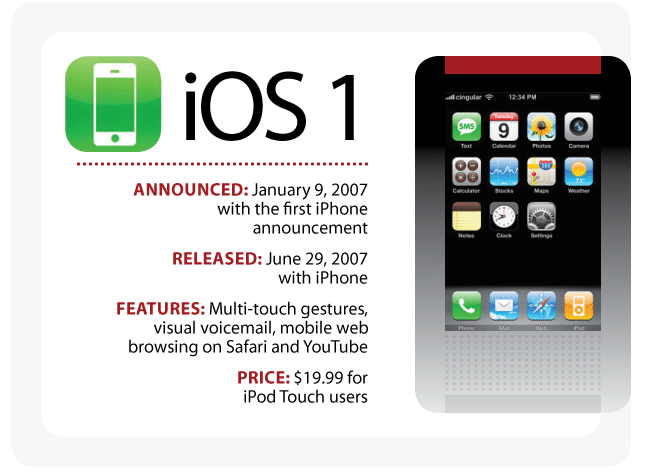
Apple's first operating system, iOS 1, arrived in September 2007 with the first-generation iPhone. At that time, the term OS (operating system) was not widely used, so Jobs called it "software", meaning it was a desktop version of OS X software.
The first-generation iOS operating system already had features such as multi-touch gestures, visual voicemail, mobile web browsing on Safari, and watching YouTube videos.
In January 2008, it added a customizable home screen that allowed users to move apps to dedicated pages on the device. It also added new apps for iPod Touch users: Mail, Maps, Weather, Notes, and Stocks, among others.
iPhone users could upgrade for free, while iPod Touch users had to pay US$19.99.
iOS 2
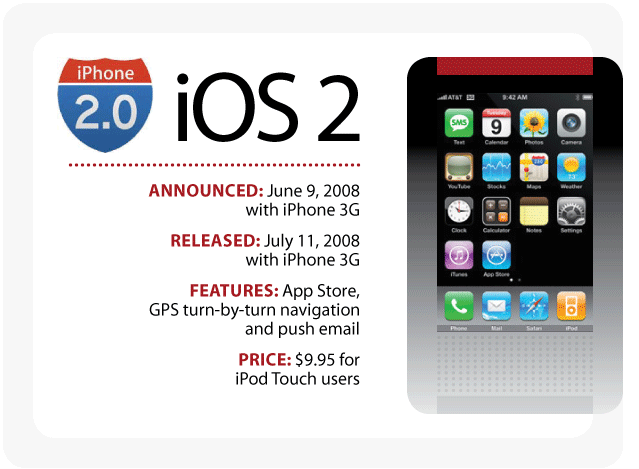
On March 6, 2008, Apple released the iPhone SDK and officially named this operating system iPhone OS. iOS 2 was officially released on June 9, and was made available for download on July 11.
iOS 2 came with the iPhone 3G, adding the App Store, GPS navigation, and push email. iPhone users could update for free, while iPod Touch users had to pay $9.95 to upgrade.
iOS 3
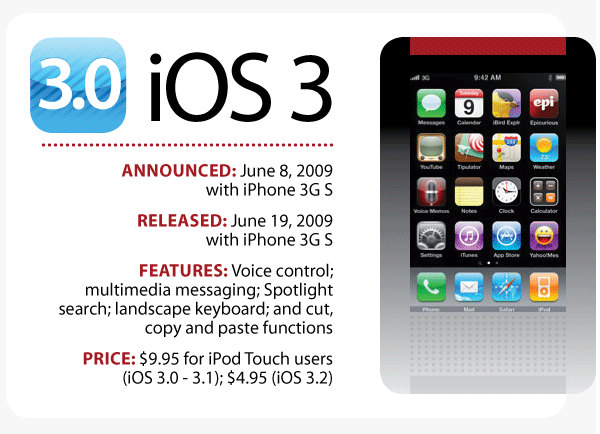
The iOS 3 operating system was released along with the iPhone 3GS on June 8, 2009, and the iPhone 3GS went on sale on June 19, 2009.
Based on the previous two generations, iOS 3 added many new features: voice control, multimedia messaging (MMS), Spotlight search, landscape keyboard, and cut, copy, and paste functionality.
In March 2010, after Apple released the iPad, it officially changed the name iPhone OS to the now-common iOS.
iPhone users could upgrade to iOS 3 for free, while iPod Touch users still had to pay $9.95 to update. Later, to encourage users, Apple introduced a strategy to upgrade to iOS 3.2 for $4.95.
iOS 4
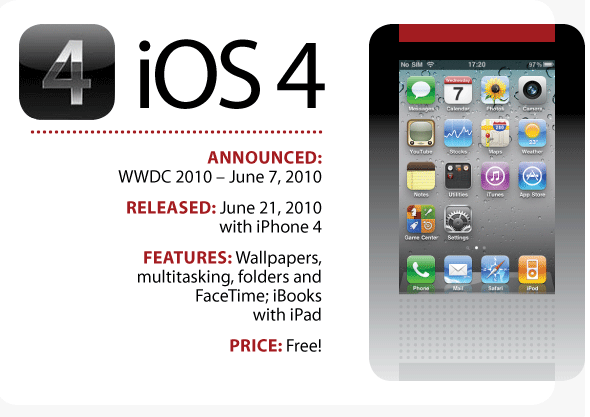
Both the iPhone 4 and iPad 2 came preinstalled with the iOS 4 operating system. The new system added wallpapers, multitasking, folders, and FaceTime, as well as iBooks for iPad.
This time, iPod Touch users finally didn't have to pay to upgrade the system. The iPhone 4 also became Apple's first phone to support CDMA networks.
iOS 5
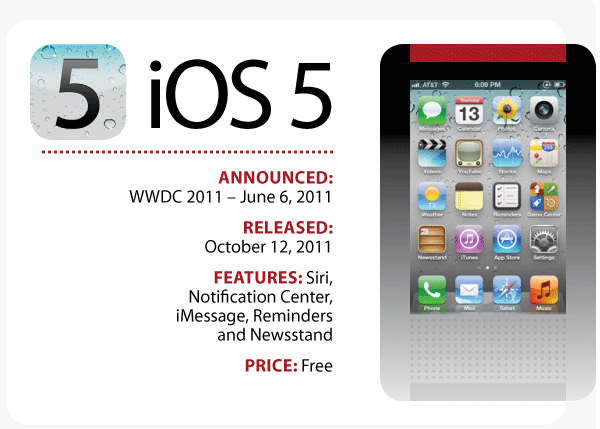
iOS 5 came preinstalled on the iPhone 4s, introducing Siri, Notification Center, iMessage, Reminders, and Newsstand. In addition, it added iCloud and the Twitter social network.
The new PC Free feature in iOS 5 allowed iOS 5 devices to be activated without connecting to a computer, and also allowed iOS devices to sync with iTunes on a computer over a wireless LAN.
The iCloud cloud service was one of the biggest selling points of iOS 5. Users could back up various data on their devices via iCloud, and also use this feature to locate their iOS devices and approximate locations of friends.
iOS 6
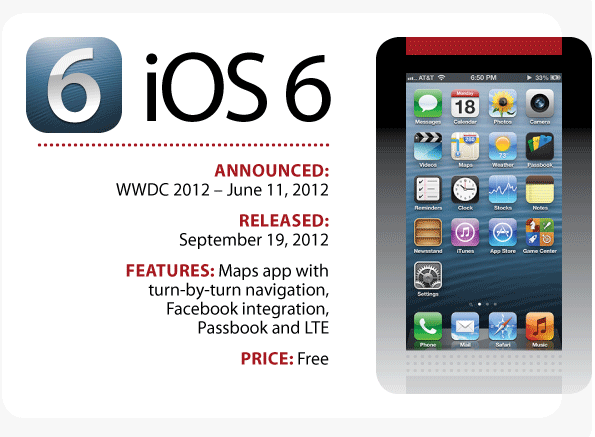
The iPhone 5 and iPad mini were released with the iOS 6 operating system preinstalled, with built-in Google Maps and YouTube apps. Previously, users had to manually download them from the App Store.
iOS 5 also included Apple's own map service, added turn-by-turn navigation with voice reminders when a turn is needed, integrated Facebook and Passbook, and supported LTE networks.
Support for Passbook is a very convenient feature. Your boarding passes, movie tickets, shopping coupons, membership cards, and more tickets are now all organized in Passbook.
The new Panorama mode on iPhone and iPod touch allows you to capture a 270-degree panoramic photo with a simple gesture.
iOS 7
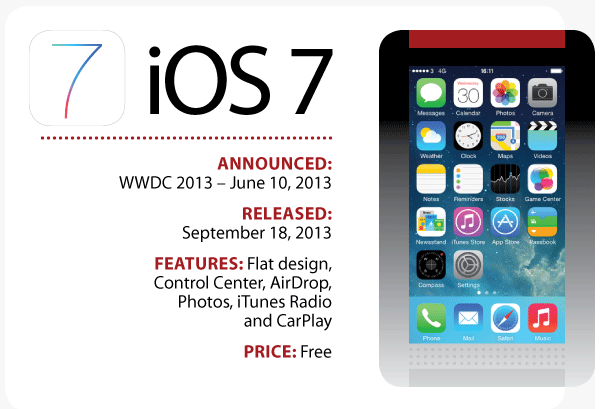
After Apple Maps was released in iOS 6, users shouted that it was a disaster. Apple's then Senior Vice President of Design (now Chief Design Officer) redesigned the entire iOS system, fast-forwarding us directly from an era of skeuomorphism to the current era of flat design.
Compared with previous operating systems, iOS 7 was simpler, flatter, and lighter. Compared to skeuomorphic design, the new style greatly reduced visual burden on users.
In addition to flat design, iOS 7 also added Notification Center, AirDrop, iTunes Radio, and CarPlay, among other features, and the Photos app was optimized.
iOS 7 was preinstalled on the iPhone 5s, 5c, iPad Air, and iPad mini 2.
iOS 8
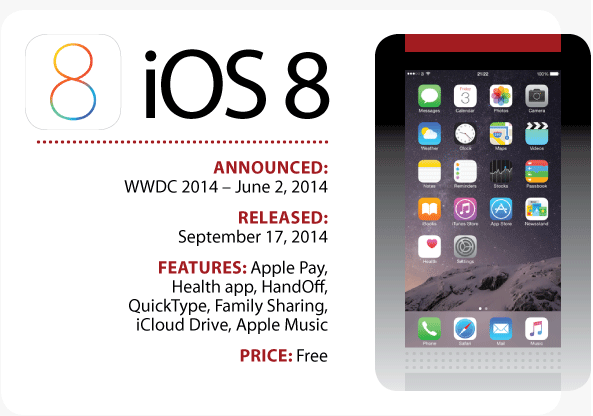
iOS 8 arrived with the iPhone 6 and iPad Air 2, and was built on iOS 7. It added Apple Pay, the Health app, Handoff, QuickType, Family Sharing, iCloud Drive, third-party keyboard support, and Apple Music, among other features.
In iOS 8, the built-in camera also added a time-lapse photography mode, a time-lapse shooting mode. The Photos app added "Smart Editing" features, such as smart adjustments and filters. It could also sync to iCloud and be shared among multiple devices, supporting Windows, Mac, and iOS devices.
iOS 8 supported voice activation of Siri. Just as "OK Google" wakes up Google Now, users could use "Hey Siri" to launch the Siri virtual assistant.
iOS 8 was the first operating system to offer a public preview before its official release.
iOS 9
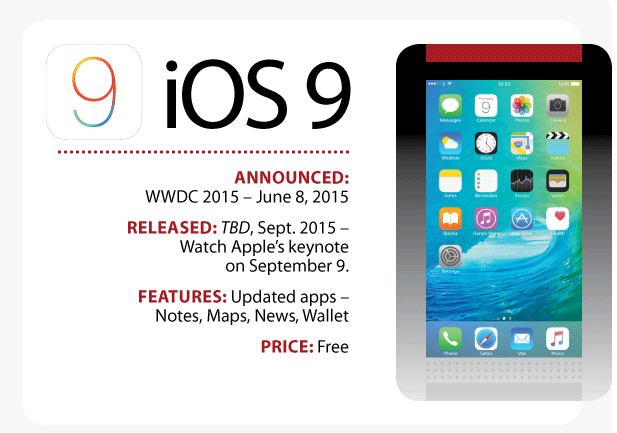
The iOS 9 preview version has already been released, but the official version still needs 2 more days, and it will arrive together with the iPhone 6s and 6s Plus.
New features in iOS 9 will include: an upgraded Notes (supporting sketches and image attachments), an upgraded Apple Maps (with new public transit features), the News app (replacing Newsstand, showing news content from CNN and Wired, among other media), Passbook renamed to Wallet with added support for membership cards and gift cards, split-screen multitasking features (Slide Over, Split View, and Picture-in-Picture), Low Power Mode, a 6-digit passcode, improved battery life, and more.
iOS 9's space requirement was drastically reduced. According to Apple, they greatly optimized the space needed for iOS 9 upgrades, dropping it from 4.6GB in iOS 8 to 1.3GB, which many 8GB and 16GB users cheered.
The above is the story of how the iOS operating system, over the 8 years from 2007 to now, gradually added features, optimized, evolved, and grew to where it is today.