Algorithms are extremely important to our lives today, and it is impossible to overstate their significance. They are everywhere in the virtual world, from financial institutions to dating websites. However, compared with other algorithms, some of them have changed and controlled our world to a greater extent—this article lists ten of the most important ones.
Before formally introducing the algorithms, let's quickly review some basics. Although there is no clear definition, computer scientists describe algorithms as a set of rules that defines the order of operations. They are a set of sequential instructions that tell a computer how to solve a problem or achieve a given goal. A good way to understand algorithms is to visualize them as flowcharts.
1. Google Search
Not long ago, search engines became the rulers of the Internet age. Along with the rise of search engines came Google and its PageRank algorithm.

Today, in the core U.S. search market, Google holds a 66.7% market share, followed by Microsoft (18.1%), Yahoo (11.2%), Ask (2.6%), and AOL (1.4%). Needless to say, Google has dominated the search market, and many of us regard Google as the primary gateway to the Internet.
PageRank works by relying on two components: one is an automated program called a "spider" or "crawler," and the other is a keyword index and its positions. The algorithm roughly calculates the importance of a webpage by counting the number and quality of links pointing to it. The basic idea of the algorithm is that more important webpages will have more links pointing to them. It is essentially a popularity contest. In addition, PageRank also considers the frequency and position of keywords on a page, as well as when the page was published.
2. Facebook News Feed
Although we may not want to admit it, Facebook's News Feed is our favorite place to waste time. Unless your personal preferences are set to show all events and update all friends' news in chronological order, what you see is a pre-processed selection, tailored by Facebook's algorithm to show you certain news items.
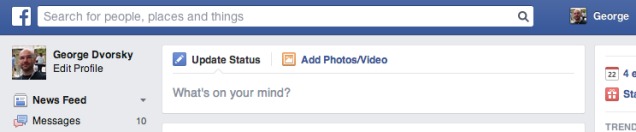
To decide which news content is most interesting, the algorithm considers many factors, such as the number of comments, the publisher (yes, there is a ranking of "popular" people, meaning those you interact with the most), and the post type (e.g., photo, video, status update, etc.).
3. OKCupid Couple Matching
Online dating is now a $2 billion industry. Thanks to the growth of sites such as Match.com, eHarmony, and OKCupid, this industry has expanded by 3.5% each year since 2008. Analysts believe this accelerated growth will continue over the next five years—understandably so: it is an effective way for couples to meet. Dating websites have not only produced more successful marriages; they are also skilled at matching potential partners according to individual preferences and inclinations. Of course, such matching is entirely accomplished by algorithms.
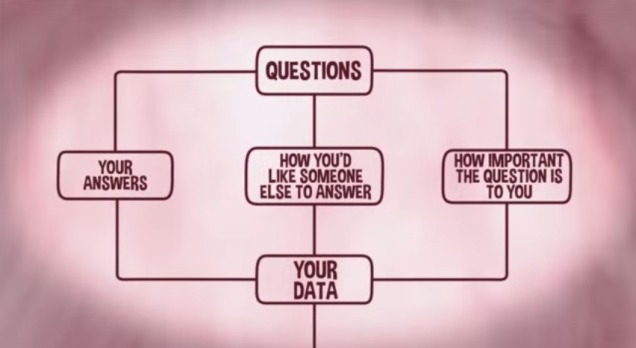
Let's take OKCupid as an example. OKCupid is a free dating website, and one of its co-founders is Harvard mathematician Christian Rudder. OKCupid takes a decidedly analytical approach to matchmaking, extracting as much information as possible from users. OKCupid's matching algorithm does not simply match common interests; each question is also assigned a weight to measure how important that question is to the user and their potential partner. This is what is meant by "differences make the difference"—it is one of the reasons OKCupid is one of the most effective dating websites.
4. NSA Data Collection, Interpretation, and Encryption
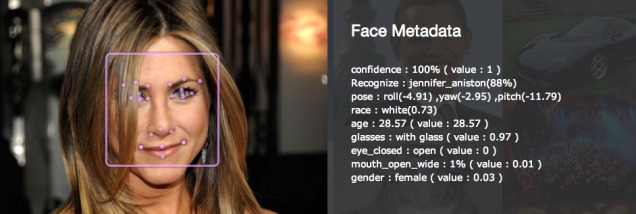
We are increasingly being watched by algorithms rather than by people. Thanks to Edward Snowden, we know that the U.S. National Security Agency (NSA) and its partners have secretly monitored millions of innocent citizens. Recently disclosed documents show that many surveillance programs have been carried out by Five Eyes, an intelligence alliance consisting of the United States, Australia, Canada, New Zealand, and the United Kingdom. They have monitored our mobile phones, email accounts, webcam images, and geolocation data. Also, by "they," I mean their algorithms—there is far too much data for humans to collect and interpret manually.
Interestingly, the NSA claims that it does not actually "collect" our data. According to a 1982 procedures manual, "information collection" means when information is gathered and used by Defense Department intelligence components within the scope of their duties. Meanwhile, "data collected by electronic systems means information that is collected and converted into an intelligible form." Bruce Schneier of The Guardian explains:
"So suppose your friend has thousands of books at home. According to the NSA's interpretation, he is not 'collecting' books. Only the books he actually reads are 'collected' by him; when he uses the books for other purposes, he cannot be considered 'collecting' them."
This creates a problem because:
Computer algorithms are closely connected to people. When we think about computer algorithms monitoring us and analyzing our personal data, we must think about the people behind the algorithms. Is someone actually looking at our data? In fact, what they are capable of doing is precisely surveillance.
Finally, the most relevant is the NSA's Suite B encryption algorithms, a powerful set of algorithms used for encryption, data exchange, digital signatures, and hashing. The agency uses these algorithms to protect both classified and unclassified documents.
5. Recommendation Algorithms
Websites such as Amazon and Netflix record the books you have purchased or the movies you have watched, and then recommend products based on our preferences.

Like many automated processes, this uniquely 21st-century technology has both advantages and disadvantages. Although such recommendations are sometimes helpful, they can also miss the mark—especially after you buy a children's book as a gift for your three-year-old daughter.
Like PageRank and Facebook's News Feed, such algorithms are creating what is called a "filter bubble," a phenomenon in which users are isolated from information they are not interested in—effectively sealing users off inside ideological "bubbles." This has led to what Eli Pariser calls "information determinism": our past browsing interests on the Internet determine our future.
6. Google AdWords
Similar to previous algorithms, Google, Facebook, and other websites track your behavior, wording, and search requests to serve targeted ads. Google's AdWords—the company's primary revenue source—operates on this predictive model, and Facebook is also working hard on related research (when was the last time you clicked a Facebook ad?)
7. High-Frequency Stock Trading

The financial sector began using algorithms to predict market fluctuations long ago, but their application in high-frequency stock trading has only just begun. Such high-speed trading involves algorithms, also called bots, that can make decisions on orders within milliseconds. In contrast, a human typically needs at least a second to react to potential risks. As a result, people are gradually being removed from the actual trading loop—a completely new electronic ecosystem is taking shape.
However, sometimes these algorithms cause errors. Leo Hickman explains:
For example: the "flash crash" of May 6, 2010, when the Dow Jones Industrial Average fell an average of 1,000 points within minutes, and the market did not rebound until twenty minutes later. This dramatic vertical decline has not been fully explained to this day, but most economists attribute it to "a race to the bottom." The culprit behind this "race to the bottom" is the large-scale use of quantitative trading algorithms to achieve high-frequency trading. Scott Patterson, a Wall Street Journal reporter and author of The Quants, compares the use of these algorithms on the trading floor to an airplane's autopilot. Today, most trading is done automatically by algorithms, but when unusual situations arise—such as a flash crash—human intervention should occur.
8. MP3 Compression
Data compression algorithms are an indispensable and important part of the electronic world. We want to receive media data faster while also saving hard drive space. Therefore, many methods have been designed to compress and transmit data.
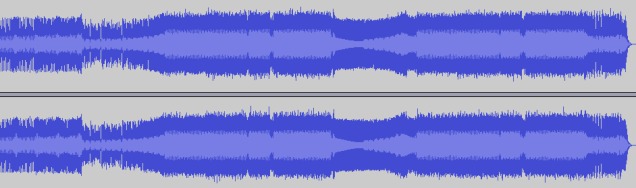
For example, Cisco Systems developed the CRTP protocol in 1991. In 1987, German researchers invented the MP3 format widely used today, reducing audio size to one-tenth of its original size. This compression format led to a revolution in the music industry (with both positive and negative effects).
9. Predictive Analysis Software
This technology does not yet dominate our world, but it will soon. More and more police agencies are using predictive analysis technology—a new tool reminiscent of the movie Minority Report.
In 2010, it was reported that with IBM's predictive analysis software (called CRUSH, short for Criminal Reduction Utilizing Statistical History), the Memphis Police Department reduced serious crimes by more than 30% since 2006, including a 15% reduction in violent crime. Meanwhile, cities in Poland, Israel, and the United Kingdom are also paying attention to this technology. Now, pilot programs have begun in Los Angeles, Santa Cruz, and Charleston.
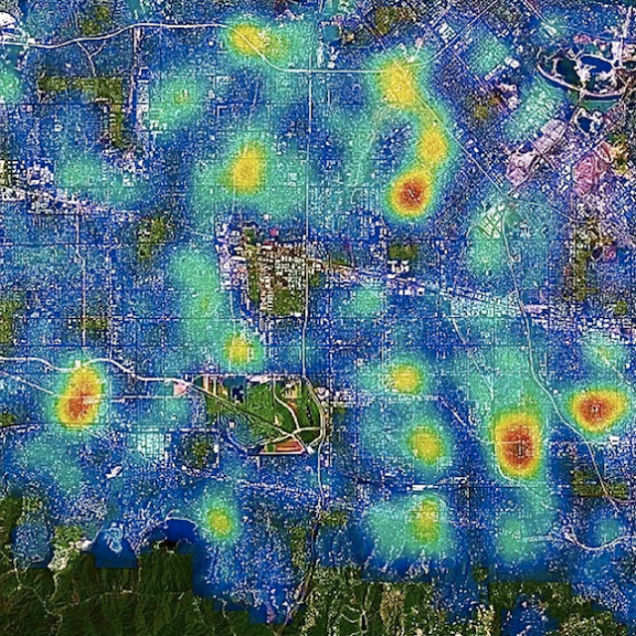
This technology combines data collection, statistical analysis, and, of course, cutting-edge algorithms. It allows police to assess a city's crime characteristics and predict possible crime "hotspots," thereby "proactively allocating resources and deploying personnel, improving the efficiency of manpower and resources, and enhancing public safety."
In the future, this system may replace analysts on a large scale. Criminal behavior can be tracked by precise algorithms that monitor internet behavior, GPS, personal electronic devices, biometric data, and other forms of real-world communication. Increasing numbers of drones will be used to track potential criminals, predicting their intentions by analyzing their body language and other visual cues.
10. Auto-Tune
Finally, for entertainment purposes only, tuning is now done by algorithms. Whether for vocals or instrument sounds, these devices can slightly modify pitch through a specific set of rules, bringing the pitch to the nearest accurate semitone. Interestingly, this technology was originally used by Exxon's Any Hildebrand to process seismic data.
American singer Cher's "Believe" is considered to be the first pop song to use Auto-Tune.