
Recently, Tomas Stern, a columnist for SEL, briefly reviewed the development history of SEO, describing the several stages SEO has gone through from 1991 to the present and briefly explaining the future development of SEO.
At the dawn of the internet, people had no concept of SEO. With the rapid development of the internet, SEO evolved from a primitive "single-celled organism" into a "higher organism" with a complex structure. From simple to complex, SEO has never stopped evolving. Today, SEO is increasingly difficult, leading many webmasters to exclaim, "SEO is dead."
Today's SEO is no longer just about building external links and tweaking Titles and Tags. If you're still doing these things, then SEO died long ago. The internet has long since expanded beyond the PC. The widespread adoption of mobile devices has greatly accelerated the development of mobile internet, and many webmasters have shifted their battlefield from PC to mobile. At this point, the main SEO market has clearly moved from PC to mobile.
The Origin of Life (1991-2002)

On August 6, 1991, the website built by Tim Berners-Lee (http: //info. cern. ch/) officially went live. It was also the world's first website, explaining to people what the World Wide Web was, how to use a web browser, and how to set up a web server... In the following years, the World Wide Web gradually improved. Over time, the usability of information for users was enhanced and optimized.
Eventually, when websites flourished everywhere, a new problem emerged: how could people find the websites or content they wanted as quickly as possible through the internet? Thus, search engines came into being. In 1993, search platforms including the Excite search engine completely revolutionized the classification and management of internet information, making information search much more convenient.
Note: The Excite search engine was created in 1993 and was a product of ARCHITEXT. It was one of the earliest and most widely used search portal websites in the United States. The site had a user-friendly interface and offered multiple search methods, including keywords, phrases, and natural language.
Shortly after, Yahoo (founded in 1994) and Google (founded in 1997) joined the search battlefield, further simplifying data indexing and delivery, thus improving search efficiency.
The birth of search engines was also the initial stage for SEO. During this period, marketers used keyword optimization, tag optimization, and external link building to achieve higher search engine rankings. Moreover, search engines were still in their infancy at this time; a new algorithm update often took months to complete, which gave black-hat SEOers ample opportunity to exploit loopholes.
The future search engine giants also saw the enormous potential of the search market during this period.
Early Growth Period (2003-2005)
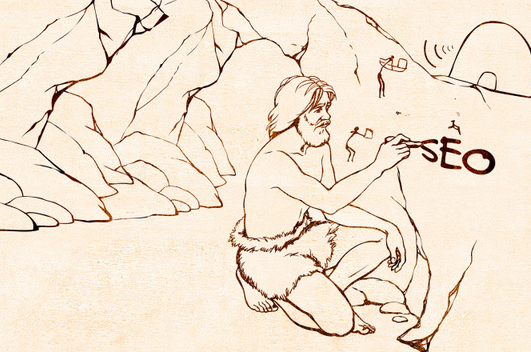
During this period, black-hat SEO was rampant. To provide a fairer competitive platform for websites, Google Search began further exploration of search engine technology. During this time, Google released many algorithm updates, improved its penalty mechanisms, and increased efforts to crack down on cheating methods such as spam external links and keyword stuffing.
By enhancing information value and content relevance, search engines finally entered the first stage of recommending searches based on users' search history. During the same period, they also added more recommended information to search results by locating users' geographic information.
During this phase of SEO, marketers focused most of their efforts on external link building to increase search exposure.
It was also during this period that Google, with its motto "don't be evil," demonstrated its determination to regulate search results. In short, at this stage, the search engine giants all realized the importance of personalization and user experience.
Medieval Period (2006-2009)

By the time search engines reached this stage, users demanded more personalized, comprehensive, and responsive search experiences. Search engines also began shifting toward universal search. Search results were no longer presented only in text form; images, videos, and other elements were also incorporated into results. For example, Google search results also included real-time updates from Google News, content from Twitter, and more, placing greater emphasis on content timeliness and user interests.
In 2008, Google released Google Suggest, a search keyword suggestion system. Combined with keyword research tools, Google Trends, Google Analytics, and other tools, and using users' search history and search trends, it helped users auto-complete search terms, search for popular artists and music, look up phone models, and more. This improved content usability and recommended more relevant content to users.
SEOers at this stage also better understood the importance of user experience, devoting more energy to website design and personalized content. In addition, many webmasters recognized the importance and development potential of new media, attempting to increase website exposure through the timeliness of new media messages.
Enlightenment Period (2010-2012)
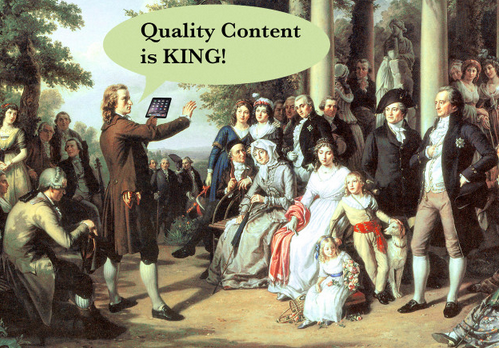
Between 2010 and 2012, the SEO market underwent tremendous changes, with notable shifts in branding, content quality, user-focused content, and penalty mechanisms.
Among the most significant was Google's attitude toward keyword optimization, content quality, and over-optimization, which greatly affected search result rankings. Sites that did not conform to Google's search mechanisms, even large sites like J.C. Penney and Overstock, would likewise suffer the fate of being K'd (de-indexed).
The new search rules brought entirely new search features, such as search users' growing curiosity, increasingly complex social relationships, and website accessibility, which also led to the emergence of new things like the Google Knowledge Graph. Search mechanisms gradually moved from universal search to local search. Rather than clicking through web pages to get answers, more users wanted to get everything they needed directly on the search results page. Seeing this opportunity, Google acted quickly - it improved the Google Suggest feature to provide users with a faster query experience and display results directly on the search results page.
In addition, social media showed extremely rapid growth during this period. To cater to this market demand, Google launched Google+.
In this context, to successfully optimize a website, SEOers not only had to focus on content quality, but content sharing also became an essential component. When website content was shared through channels such as social media, it not only gained external links and exposure but also greatly contributed to building the website's authority.
The combination of social media and SEO also facilitated the fragmentation of the information age: faster-paced, more personalized, and more segmented information.
Contemporary Era (2013-Present)

Today's SEOers are standing at a crossroads, torn between personalization and personal privacy. In an era where every aspect of life is invaded by search engines and technology, people lament information security and privacy issues, yet they still cannot escape them.
Large companies like Google analyze data such as users' search history, geographic location, and device usage to improve their products, while marketers use this information to optimize content.
During this period, SEOers' battlefield shifted from PC to mobile. Your content, your website, and your products must meet mobile device requirements and conform to local search mechanisms. At the same time, search engines led by Google have been continuously updating mobile search algorithms. From user experience to mobile-friendliness, improvements in mobile search algorithms mean that if a site's mobile search optimization is not done well, it may lose the mobile internet market; even a temporary loss can be devastating.
Fragmented content, responsive design, mobile-friendliness, and user-intent orientation... these are all search features that today's SEOers must pay attention to. In short, the most important thing for SEO right now is to explore content personalization and quality.
Looking Ahead

For the future, we can only make predictions; no one can give a definitive answer. But undoubtedly, user-oriented content building, personalized content recommendations, and high-quality content are all points SEOers must focus on.
Search engines are undoubtedly becoming more intelligent; getting the desired information with the fewest steps is what users expect. Of course, SEOers also need to manage optimization for both PC and mobile entry points.
As search engine algorithms continue to improve, more rules and penalty mechanisms will force SEOers to find new breakthroughs. But compared with various black-hat and cheating tactics, focusing on website content and user experience, building good interactive relationships with users, and doing well in social media marketing are undoubtedly the safest and most effective SEO strategies.
Source: http://www.chinaz.com/web/2015/0626/417424.shtml#g413091=1