I once saw a phenomenon that could be called an irreconcilable contradiction.
Many years ago.
A small internet company built a fairly promising e-commerce website, so the boss formed a team,The team roughly consisted of the following parts:
1. One technical lead, plus three coders.
2. Two operations staff.
3. Two editors.
4. One "specimen" of a leader.
This team jointly completed development, debugging, content editing, publicity, packaging, and other tasks. After everyone worked in a chaotic mess for two months, the website was finally developed.
Before the launch, the technical group basically took the leading position. Based on the needs each person had fantasized about earlier, everyone strictly surrounded the technical team to complete prototype design, code writing, and final UI presentation and testing.
The core coder, Ah San, once said on QZone: The entrepreneurial atmosphere at our company is really great. I sincerely thank the company and CCTV for providing me with such a harmonious team atmosphere.
What a pity. The dawn before the darkness arrives is always so bright or dazzling.
The website went live, and that "specimen" of a leader announced:
1. The website has entered the operations period. Thanks for your hard work, tech brothers.
2. Next, I (the leader) will plan and arrange the overall work of the website.
3. Operations staff will assist the leader in completing market operations work.
4. I hope the technical team members will continue to strongly support and guarantee the website work.
For reasons related to other company projects, the technical lead took one coder and transferred to another business line, leaving only Ah San and another novice technician on the website team.
From then on, Ah San's nightmare began.
1. The website was no longer led by technology. Previously, modifications to website features had to be reviewed by the original technical lead. Now that was no longer necessary; operations staff directly submitted requirements to Ah San and his team.
2. Ah San noticed that the team began to stir up a bit of political atmosphere. That day the website went down, and that "specimen" of a leader pounded the table and demanded the operations staff find the cause and identify the person responsible.
In the end, Ah San found it was due to a DDoS attack. But the conclusion in the email the operations staff finally sent to the leader was:The technical team's problem.
The leader demanded Ah San take responsibility.
That night, Ah San wrote for the first time in QZone: Screw your "responsibility."
3. The website's registered users gradually increased. After listening to some brainless netizens' suggestions, the operations staff asked Ah San to develop a new feature.
As soon as Ah San saw the requirement, its difficulty and workload were no less than developing a Sina Weibo.
Ah San said it couldn't be developed, or at least would take half a year or perhaps longer.
The operations staff didn't say anything and directly escalated the email to the leader, with the subject: Ask technicians to take market demands seriously.
That night, Ah San wrote a draft resignation email on his computer and deleted it to the Recycle Bin, but did not empty the Recycle Bin.
A few more months passed, and the above phenomena repeated several times. Meanwhile, due to various reasons, the website's traffic and sales performance remained stagnant.
The leader pounded the table again: If the website performance doesn't improve, the operations group can all get the hell out (actually just two people).
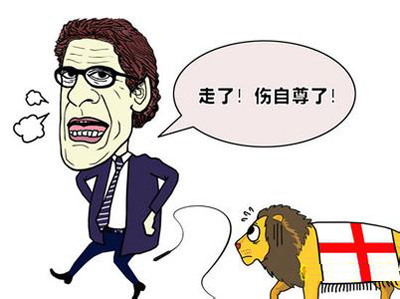
The conflict between the operations staff and Ah San finally erupted,and the former wrote an email, to the effect: Since the website opened until now, due to insufficient technical support, the requirements raised could not be quickly responded to. Therefore, the technical team must bear great responsibility for the stagnant website performance. This email was cc'd to the leader, the original technical lead, the boss, and the boss's wife.
Once this email came out, Ah San finally couldn't hold it in.He immediately walked to the seat of the number one person in the operations group and confronted him:
San: What do you mean by this?
Operations: No special meaning, I'm just stating the facts.
San: Bullsh*t. If you can't improve the website performance, what does that have to do with tech?
Operations (also getting angry): How is it not related to you? Which one of the technical features proposed in the past few months did you complete on time?
San: Look at which of these features are actually effective. They were all conceived from your own fantasies.
Operations: Do you understand the market better than me?
San: I don't understand the market, but do you understand technology?
Operations: I don't need to understand technology.
San: Damn. I don't need to understand the market either.
The exchange of insults gradually escalated until the two almost came to blows. If it weren't for the "several specimens" of leaders in the company stepping in to intervene, the furious Ah San that night would have embedded Operations Number One into the wall.

That night, Ah San went into the Recycle Bin and restored the resignation email...... You know what.
Of course, after collective discussion among many "specimens" of leaders, the conclusion was: Ah San's technical team did not have to bear "performance responsibility," but should face the work of the entire department with a positive attitude and a big-picture perspective.
——————————————————————————
The above is a true story, mostly occurring in small companies and small teams. In fact, I myself, as a technician, have also personally experienced similar scenarios.
This is called the "irreconcilable contradiction" between operations and technical staff in small companies. Its main focal points are:
1. Operations staff, do you understand technology?
2. Technical staff, do you understand the market?
If you understand both technology and operations, then you will become "that specimen" of a leader.
Before this article was published, the prototype of Ah San told me the subsequent plot.
1. This company later established an operations department and a technical department separately, keeping the two apart.
2. Requirements from the operations department need to be reviewed by the head of the technical department; similarly, features completed by the technical department need to be accepted by the head of the operations department.
3. On the surface, this seemed so harmonious and so clearly divided.
In fact, this "irreconcilable" contradiction was just beginning: the originally flat contradiction suddenly became mixed with endless bickering between the two departments, the two heads' open and covert struggles in front of the boss, and office politics brought by the complex personnel structure.
And this protagonist Ah San is now the head of the technical department. He said his greatest feelings now are:
1. So it turns out that both technical staff and operations staff have to "support their families" — that is the most fundamental cause of their conflict.
2. Only after becoming a leader did he realize that the contradiction between operations and technology doesn't need to be reconciled at all. If you keep this contradiction at a certain level, operations staff and technical staff will always thrive in this "irreconcilable contradiction."
3. It turns out the hardest thing in the workplace is being "a good specimen" of a leader.