A classmate who used to work at Yixun became a JD.com employee last year. As the year end approaches, he is complaining to me that he gets no year-end bonus, just a standard 13th month's salary... Everyone knows Tencent's year-end bonuses have always been notoriously generous, but only within its game teams. In the year the LOL team got a 60-month salary bonus, the WeChat team only got an iPhone 5 and an iPad mini per person, which in comparison was utterly lame. The gap between rich and poor is huge.
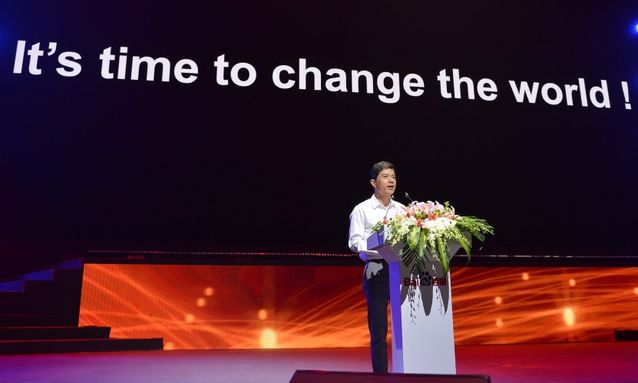
This year, the one stealing the spotlight for year-end bonuses should be Baidu, which has also begun widening the gap. At this year's Baidu annual meeting, Robin Li said,Baidu's year-end bonus rules have changed; some people will receive a year-end bonus of 50 months' salary.What does that mean? Take engineers with 1-3 years of work experience. Baidu is said to have the highest salaries in the industry, with a minimum monthly salary of 19,400. That makes the year-end bonus 970,000, plus a usual annual salary of over 300,000... Even paying taxes would be a pleasure for such wealthy employees. An even more lavish fact is that many Baidu employees' average monthly salary is far higher than that of those "1-3 year experienced engineers" kids; multiply that by 50, or even 10, and you get an astronomical figure. Moreover, what is truly jaw-dropping is not just the 50 months, but the four words Robin said next: "No upper limit."
Such a "lavish year-end bonus" has never happened at Baidu before. Baidu's past approach was to calculate differentiated coefficients through a company formula (indeed a technology-driven company): Year-end bonus = bonus base × (company coefficient × 30% + individual coefficient × 70%).
This year Baidu's performance has been excellent. Not only has PC search become solidly entrenched, but it has also gone global, personally witnessed by President Xi. Mobile traffic exceeded 50% and mobile revenue accounted for 36%, both leading the industry. New technologies and products are emerging one after another, and the stock price has doubled over the past year. I remember that when Baidu's stock did poorly in 2012, Robin Li said Baidu needed to become "wolf-like." Now it has truly been wolf-like and eaten meat.
With such a good overall situation, naturally there should be major incentives. Baidu also has a fine tradition: Robin Li has always been willing to invest in motivating exceptionally outstanding teams. Every summer, the Summer Party presents the highest award — 6 million yuan, a highest award known throughout the industry. This year, Baidu employees' year-end bonuses are also unprecedentedly generous.
But this year's incentive approach is completely different. Heavily rewarding outstanding teams and setting up models is actually meant to encourage employee dedication, which can stimulate employees' fighting spirit better than an average reward strategy. Alibaba often sends each employee a month or so of salary via Alipay at year-end as an all-staff incentive, and its year-end bonus is a moderate 4-9 months. Jack Ma's approach is still quite gentle.
Some laugh while others cry. It is said that after the rules were adjusted, some people at Baidu got a year-end bonus of 0... Baidu no longer focuses solely on KPI; instead, it has introduced a brand-new concept called DELTA (increment, one's contribution to the company over the year). How it is assessed is kept confidential, but the core principle is: assess increments, recognize contributions, be fairer, do well and get more, and be more results-oriented. Unlimited incentives are given to those who do well, while those who do poorly get no special incentives — that is understandable. It is said that Cheetah Mobile's year-end bonus last year was 2-6 months, and those who got only 2 months might be cruelly eliminated. At Alibaba, those who got only a 4-month year-end bonus may also face Game Over. Internet companies are clear in rewards and punishments.
However, it is only Baidu and Tencent whose year-end bonus systems have begun to adopt a heavy-reward model. For Alibaba, Sohu, NetEase, Cheetah, Qihoo, and Qunar, year-end bonuses can reach up to 4-6 months. Other internet companies generally give only one or two months unless their performance for the year is particularly good. Although JD.com ranks only behind BAT in China's internet market value, its year-end bonus is rather shabby. Last year, it was said online that the year-end bonus was 1-2 months; those who could get two months were quite remarkable. Now that it has gone public, who knows if it will be more generous. Xiaomi, a future tycoon and currently the most moneyed startup, has a year-end bonus of only 2-3 months. "Great rewards lead to brave men." Baidu and Tencent know this well.
The year-end bonus payout schedule this year:Baidu should be the earliest in the industry: it arrives with salary on January 31. Most companies pay before the Chinese New Year. Alibaba has moved it to April this year; after going public, it has to wait until the fiscal year ends... This actually doesn't matter. My former employer paid year-end bonus on December 31, but it was only one month's salary, so I couldn't get excited... For a 50-month year-end bonus like Baidu's, I'd be willing to wait until April or May.
Finally, let me gossip a bit more. In recent years, the internet industry has indeed grown like a myth, especially e-commerce, advertising, and other industries that have hit traditional industries hard, making a lot of money. The fact that founders of the three BAT giants have all been China's richest people also reflects the prosperity and wealth of the internet industry. The internet industry gathers China's smartest people. Outsiders think benefits are like Google's — flat, free, with abalone ponds where you can soak during work. In reality, employees work very hard. The lights in Baidu's building stay bright late into the night, taxis line up underneath Tencent's office buildings, engineers stay up late so much that they lose hair. Words cannot express the tears. Fortunately, internet companies still attach great importance to and cherish talent. After all, talent is the core competitiveness, and no amount of investment is too much. Everyone should learn more from Baidu and Tencent's practices.
Original source: http://luochao.baijia.baidu.com/article/43705