Introduction
ES6, full name ECMAScript 6.0, is the next version standard of JavaScript, released in June 2015.
ES6 is mainly to solve the inherent shortcomings of ES5, such as the fact that JavaScript does not have the concept of classes. However, the JavaScript in current browsers is ES5, and most higher-version browsers also support ES6, but only implement some of ES6's features and functionality.

You can also first look atA Concise Tutorial on ECMAScript 6to get a quick understanding.
Background of ECMAScript
JavaScript is the name of the language that everyone knows, but this language name is a trademark (registered trademark of Oracle Corporation). Therefore, the official name of JavaScript is ECMAScript. In November 1996, Netscape, the creator of JavaScript, submitted JS to the international standards organization ECMA (European Computer Manufacturers Association), hoping that this language could become an international standard. Subsequently, ECMA released the standard that regulates browser scripting languages, namely ECMAScript. This is also beneficial to the openness and neutrality of the language.
History of ECMAScript
ES6 is the version with the greatest changes in the ECMAScript standard in over ten years, adding many new syntax features.
- In 1997, ECMAScript 1.0 was born.
- In June 1998, ECMAScript 2.0 was born, containing some minor changes to synchronize with the independent ISO international standard.
- In December 1999, ECMAScript 3.0 was born. It was a huge success and received extensive support in the industry. It established the basic syntax of JS, which was completely inherited by subsequent versions. Even today, when we first learn JS, we are actually learning the 3.0 syntax.
- ECMAScript 4.0 in 2000 was the predecessor of the current ES6, but because this version was too radical and made a thorough upgrade to ES 3, it was temporarily "harmonized".
- In December 2009, ECMAScript 5.0 was officially released. The ECMA expert group expected that the fifth version of ECMAScript would become the mainstream development standard from mid-2013 to 2018. In June 2011, ES 5.1 was released and became an ISO international standard.
- In 2013, the ES6 draft was frozen, with no new features added; new features would be put into ES7. In June 2015, ES6 was officially approved and became an international standard.
Goals and Vision of ES6
It has the following goals to become a better development language to write in.
Adapt to more complex applications; achieve sharing between codebases; continuously iterate and maintain new versions.
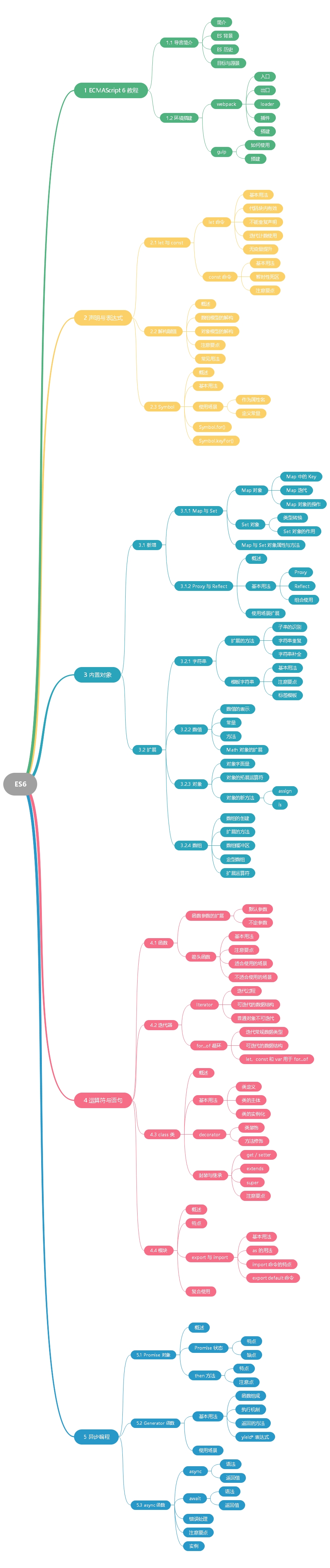
Contents of this Tutorial