Binary Search Tree Depth-First Traversal
Binary search tree traversal is divided into two major categories: depth-first traversal and level-order traversal.
Depth-first traversal is divided into three types: preorder tree walk, inorder tree walk, and postorder tree walk, which are respectively:
- 1. Preorder Traversal:Visit the current node first, then recursively visit the left and right subtrees in order.
- 2. Inorder Traversal: First recursively visit the left subtree, then visit itself, then recursively visit the right subtree.
- 3. Postorder Traversal: First recursively visit the left and right subtrees, then visit the current node itself.
Preorder Traversal Result Diagram:
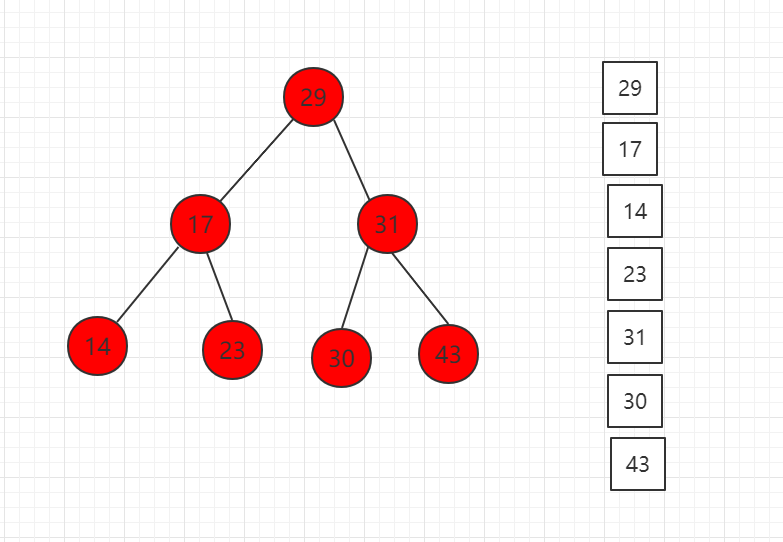
Corresponding Code Example:
...
// Perform preorder traversal on the binary search tree rooted at node, recursive algorithm
private void preOrder(Node node){
if( node != null ){
System.out.println(node.key);
preOrder(node.left);
preOrder(node.right);
}
}
...
// Perform preorder traversal on the binary search tree rooted at node, recursive algorithm
private void preOrder(Node node){
if( node != null ){
System.out.println(node.key);
preOrder(node.left);
preOrder(node.right);
}
}
...
Inorder Traversal Result Diagram:
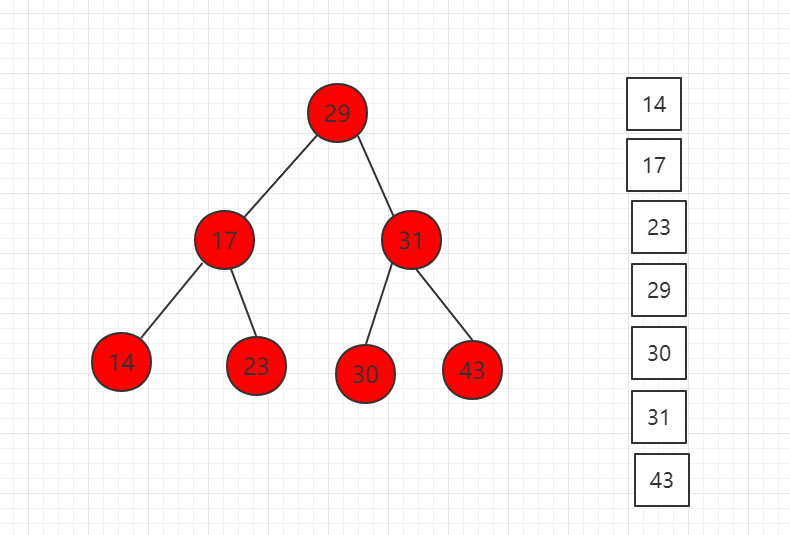
Corresponding Code Example:
...
// Perform inorder traversal on the binary search tree rooted at node, recursive algorithm
private void inOrder(Node node){
if( node != null ){
inOrder(node.left);
System.out.println(node.key);
inOrder(node.right);
}
}
...
// Perform inorder traversal on the binary search tree rooted at node, recursive algorithm
private void inOrder(Node node){
if( node != null ){
inOrder(node.left);
System.out.println(node.key);
inOrder(node.right);
}
}
...
Postorder Traversal Result Diagram:
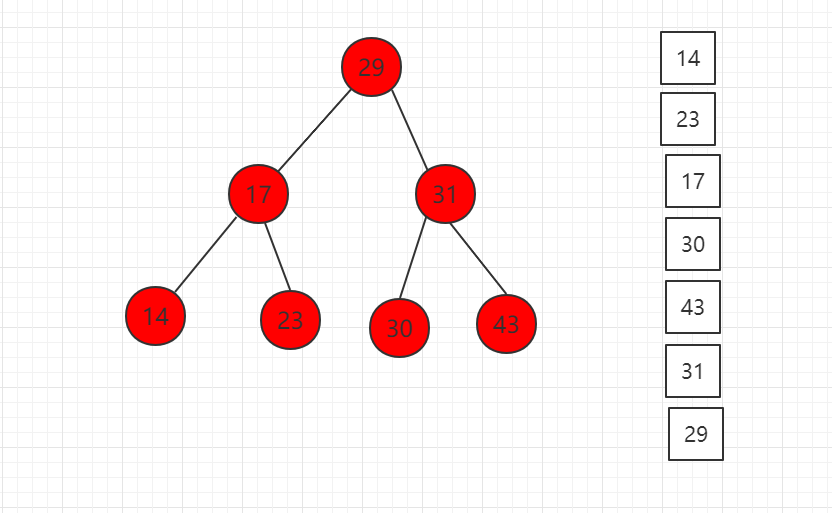
Corresponding Code Example:
...
// Perform postorder traversal on the binary search tree rooted at node, recursive algorithm
private void postOrder(Node node){
if( node != null ){
postOrder(node.left);
postOrder(node.right);
System.out.println(node.key);
}
}
...
// Perform postorder traversal on the binary search tree rooted at node, recursive algorithm
private void postOrder(Node node){
if( node != null ){
postOrder(node.left);
postOrder(node.right);
System.out.println(node.key);
}
}
...
Java Example Code
Source Code Package Download:Download
src/example/binary/Traverse.java file code:
package example.binary;
/**
* Priority traversal
*/
public class Traverse<Key extends Comparable<Key>, Value> {
// The nodes in the tree are a private class; the outside world does not need to know the specific implementation of the binary search tree nodes
private class Node {
private Key key;
private Value value;
private Node left, right;
public Node(Key key, Value value) {
this.key = key;
this.value = value;
left = right = null;
}
}
private Node root; // Root node
private int count; // Number of nodes in the tree
// Constructor, constructs an empty binary search tree by default
public Traverse() {
root = null;
count = 0;
}
// Return the number of nodes in the binary search tree
public int size() {
return count;
}
// Return whether the binary search tree is empty
public boolean isEmpty() {
return count == 0;
}
// Insert a new (key, value) data pair into the binary search tree
public void insert(Key key, Value value){
root = insert(root, key, value);
}
// Check whether the key exists in the binary search tree
public boolean contain(Key key){
return contain(root, key);
}
// Search the binary search tree for the value corresponding to the key. If the value does not exist, return null
public Value search(Key key){
return search( root , key );
}
// Preorder traversal of the binary search tree
public void preOrder(){
preOrder(root);
}
// Inorder traversal of the binary search tree
public void inOrder(){
inOrder(root);
}
// Postorder traversal of the binary search tree
public void postOrder(){
postOrder(root);
}
//********************
//* Helper functions for the binary search tree
//********************
// Insert node (key, value) into the binary search tree rooted at node, using recursive algorithm
// Return the root of the binary search tree after inserting the new node
private Node insert(Node node, Key key, Value value){
if( node == null ){
count ++;
return new Node(key, value);
}
if( key.compareTo(node.key) == 0 )
node.value = value;
else if( key.compareTo(node.key) < 0 )
node.left = insert( node.left , key, value);
else // key > node->key
node.right = insert( node.right, key, value);
return node;
}
// Check whether the binary search tree rooted at node contains a node with key value key, using recursive algorithm
private boolean contain(Node node, Key key){
if( node == null )
return false;
if( key.compareTo(node.key) == 0 )
return true;
else if( key.compareTo(node.key) < 0 )
return contain( node.left , key );
else // key > node->key
return contain( node.right , key );
}
// Find the value corresponding to key in the binary search tree rooted at node, recursive algorithm
// Return NULL if the value does not exist
private Value search(Node node, Key key){
if( node == null )
return null;
if( key.compareTo(node.key) == 0 )
return node.value;
else if( key.compareTo(node.key) < 0 )
return search( node.left , key );
else // key > node->key
return search( node.right, key );
}
// Perform preorder traversal on the binary search tree rooted at node, recursive algorithm
private void preOrder(Node node){
if( node != null ){
System.out.println(node.key);
preOrder(node.left);
preOrder(node.right);
}
}
// Perform inorder traversal on the binary search tree rooted at node, recursive algorithm
private void inOrder(Node node){
if( node != null ){
inOrder(node.left);
System.out.println(node.key);
inOrder(node.right);
}
}
// Perform postorder traversal on the binary search tree rooted at node, recursive algorithm
private void postOrder(Node node){
if( node != null ){
postOrder(node.left);
postOrder(node.right);
System.out.println(node.key);
}
}
}
/**
* Priority traversal
*/
public class Traverse<Key extends Comparable<Key>, Value> {
// The nodes in the tree are a private class; the outside world does not need to know the specific implementation of the binary search tree nodes
private class Node {
private Key key;
private Value value;
private Node left, right;
public Node(Key key, Value value) {
this.key = key;
this.value = value;
left = right = null;
}
}
private Node root; // Root node
private int count; // Number of nodes in the tree
// Constructor, constructs an empty binary search tree by default
public Traverse() {
root = null;
count = 0;
}
// Return the number of nodes in the binary search tree
public int size() {
return count;
}
// Return whether the binary search tree is empty
public boolean isEmpty() {
return count == 0;
}
// Insert a new (key, value) data pair into the binary search tree
public void insert(Key key, Value value){
root = insert(root, key, value);
}
// Check whether the key exists in the binary search tree
public boolean contain(Key key){
return contain(root, key);
}
// Search the binary search tree for the value corresponding to the key. If the value does not exist, return null
public Value search(Key key){
return search( root , key );
}
// Preorder traversal of the binary search tree
public void preOrder(){
preOrder(root);
}
// Inorder traversal of the binary search tree
public void inOrder(){
inOrder(root);
}
// Postorder traversal of the binary search tree
public void postOrder(){
postOrder(root);
}
//********************
//* Helper functions for the binary search tree
//********************
// Insert node (key, value) into the binary search tree rooted at node, using recursive algorithm
// Return the root of the binary search tree after inserting the new node
private Node insert(Node node, Key key, Value value){
if( node == null ){
count ++;
return new Node(key, value);
}
if( key.compareTo(node.key) == 0 )
node.value = value;
else if( key.compareTo(node.key) < 0 )
node.left = insert( node.left , key, value);
else // key > node->key
node.right = insert( node.right, key, value);
return node;
}
// Check whether the binary search tree rooted at node contains a node with key value key, using recursive algorithm
private boolean contain(Node node, Key key){
if( node == null )
return false;
if( key.compareTo(node.key) == 0 )
return true;
else if( key.compareTo(node.key) < 0 )
return contain( node.left , key );
else // key > node->key
return contain( node.right , key );
}
// Find the value corresponding to key in the binary search tree rooted at node, recursive algorithm
// Return NULL if the value does not exist
private Value search(Node node, Key key){
if( node == null )
return null;
if( key.compareTo(node.key) == 0 )
return node.value;
else if( key.compareTo(node.key) < 0 )
return search( node.left , key );
else // key > node->key
return search( node.right, key );
}
// Perform preorder traversal on the binary search tree rooted at node, recursive algorithm
private void preOrder(Node node){
if( node != null ){
System.out.println(node.key);
preOrder(node.left);
preOrder(node.right);
}
}
// Perform inorder traversal on the binary search tree rooted at node, recursive algorithm
private void inOrder(Node node){
if( node != null ){
inOrder(node.left);
System.out.println(node.key);
inOrder(node.right);
}
}
// Perform postorder traversal on the binary search tree rooted at node, recursive algorithm
private void postOrder(Node node){
if( node != null ){
postOrder(node.left);
postOrder(node.right);
System.out.println(node.key);
}
}
}